Why Does My Circuit Breaker Keep Tripping? Diagnosis & Safety Guide
•By Young Electric Inc (Andy & Jake Young)•Code & Safety Reviewed
Few electrical occurrences are as disruptive as a circuit breaker that repeatedly shuts down power to your living room, kitchen, or home office. While your initial reaction might be frustration with the breaker, remember: a tripping circuit breaker is doing its job. It is an automated safety device designed to cut power before overloaded wires reach ignition temperatures inside your walls.
However, if a circuit breaker trips repeatedly, forcing it to reset without diagnosing the underlying cause creates a severe fire hazard. Below, master electricians Andy and Jake Young explain the four distinct reasons breakers trip and how to diagnose them safely.
The 4 Primary Causes of Tripped Circuit Breakers
1. Circuit Overload (Most Common)
What Happens: You are drawing more total amperage than the circuit is engineered to deliver. For example, running an 1,800-watt hair dryer (15 amps) and a space heater (12.5 amps) simultaneously on a single 15-amp branch circuit draws 27.5 amps.
The Breaker's Reaction: The internal bimetallic strip inside the breaker heats up over several seconds or minutes, bending and releasing the trip mechanism. The breaker trips with a gentle click.
The Fix: Move high-draw appliances to different branch circuits or hire an electrician to install a dedicated appliance circuit.
2. Direct Short Circuit
What Happens: An energized "hot" wire directly touches a neutral wire (or bare metal box). This bypasses the electrical resistance of appliances, causing instantaneous current draw to spike into hundreds of amps.
The Breaker's Reaction: The internal electromagnetic coil snaps open instantaneously, often accompanied by a loud pop, spark, or burning smell.
The Fix: Do not repeatedly reset the breaker. An electrician must inspect the circuit for damaged wire insulation, nail punctures, or failed appliance cords.
3. Ground Fault
What Happens: A hot wire contacts a bare copper grounding wire, metal conduit, or the grounded metal chassis of an appliance. This is common in outdoor landscape lighting, water heaters, and pool pumps where moisture enters enclosures.
The Breaker's Reaction: Trips instantaneously to prevent lethal electrical shock.
4. Arc Fault (AFCI Breaker Trip)
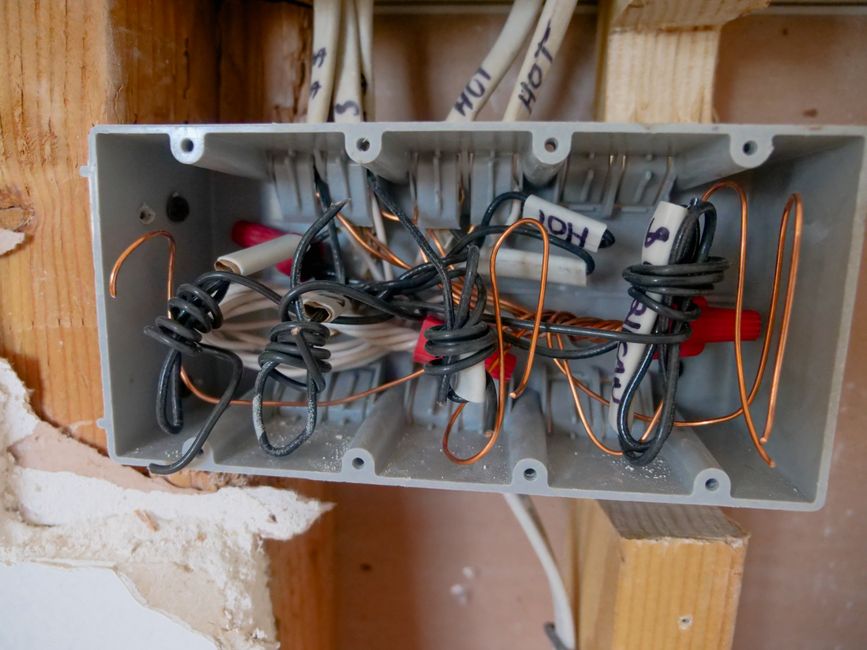
What Happens: Modern homes feature Arc-Fault Circuit Interrupters (AFCIs). AFCIs use microprocessors to detect hazardous electrical arcing—such as loose wire nuts in junction boxes, damaged cords pinched behind heavy furniture, or screws penetrating wires inside drywall.
The Breaker's Reaction: Trips immediately upon detecting the unique electrical waveform characteristic of arcing.
Safe Reset Procedure: How to Reset a Breaker Properly
When resetting a tripped breaker, follow this safety protocol:
1Unplug appliances on the affected circuit to reduce sudden inrush current.
2Locate the tripped breaker in your main panel. The handle will be in the center neutral position (between ON and OFF).
3Push the handle firmly all the way to the OFF position until you hear a distinct mechanical click. (You cannot turn it ON directly from the tripped center position).
4Push the handle firmly to the ON position.
5Warning: If the breaker immediately trips again with a loud snap or spark, leave it OFF. Forcing a short-circuited breaker to close can cause an arc flash explosion and ruin the panel busbar.
When Should You Call a Licensed Electrician?
Contact a licensed electrical contractor immediately if:
The breaker trips instantly upon resetting with nothing plugged in.
The breaker enclosure feels hot or emits a burning odor.
The breaker handle feels spongy, loose, or will not latch into the ON position.
Breakers in your panel are obsolete Federal Pacific, Zinsco, or Challenger models.
Andy and Jake are the father-and-son team behind Young Electric Inc, a Florida State Certified Electrical Contractor based in Boca Raton, FL. With over 10 years of hands-on experience, they specialize in residential panel upgrades, Level 2 EV charging, and whole-house surge protection.
Speak directly with Andy or Jake Young. We provide honest safety evaluations, upfront flat-rate pricing, and guaranteed workmanship throughout Boca Raton and South Florida.